
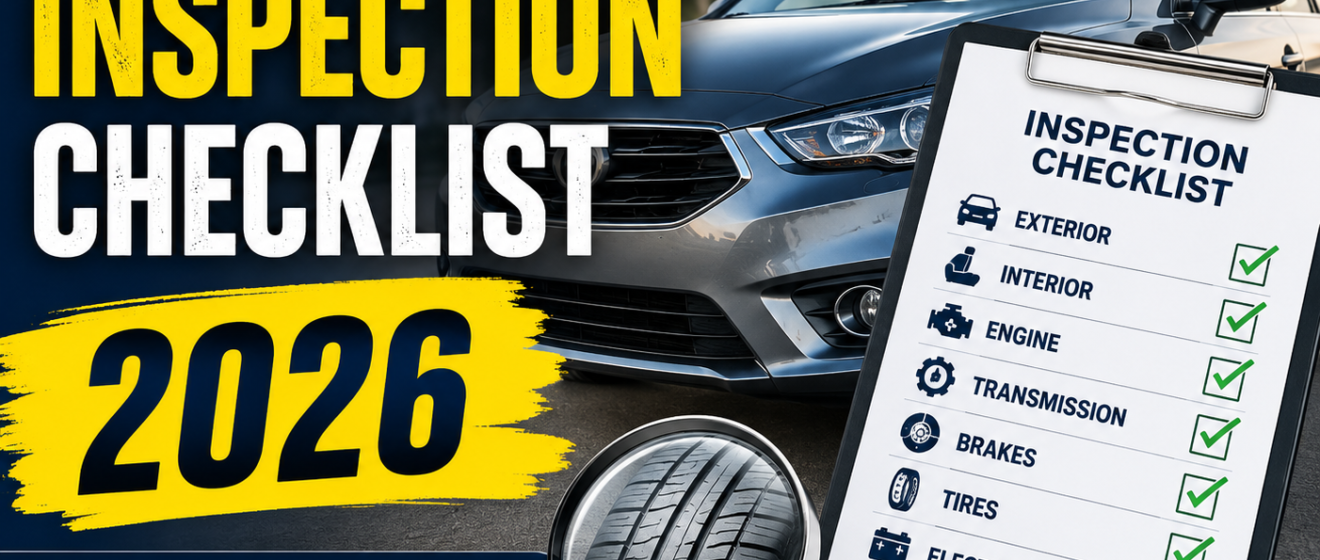
Buying a used car can be a smart financial decision. You can often get a better vehicle for less money compared to buying new. However, used cars also come with risk if you do not inspect them properly.
A car may look clean from the outside but still have hidden mechanical, electrical, or accident-related problems. That is why a proper inspection is one of the most important steps before buying.
This AutoXGlobal used car inspection checklist will help you understand what to check before making a decision.
Why a Used Car Inspection Matters
A used car inspection protects you from buying a vehicle with hidden issues. Some problems are easy to see, such as worn tyres or scratches. Others are harder to notice, such as engine faults, accident repairs, rust, or transmission problems.
Taking time to inspect the car can help you negotiate a better price or avoid a bad purchase completely.
1. Check the Exterior Condition
Start by walking around the car slowly. Look at the body panels, paint, lights, windows, mirrors, and bumpers.
Check for scratches, dents, uneven paint, rust, and panel gaps. Uneven gaps between doors, bonnet, or boot may suggest previous accident repairs.
Look closely at the paint under sunlight if possible. Fresh paint in one area may mean the car has been repaired.
2. Inspect the Tyres
Tyres can tell you a lot about how a car has been driven and maintained.
Check tyre tread depth, cracks, uneven wear, and tyre age. Uneven tyre wear may indicate poor wheel alignment, suspension problems, or previous impact damage.
Also check if all four tyres are the same brand and size. Mismatched tyres are not always a serious issue, but they can show poor maintenance habits.
3. Check the Engine Bay
Open the bonnet and inspect the engine area. Look for oil leaks, coolant leaks, damaged hoses, corrosion, or unusual smells.
The engine bay does not need to look brand new, but it should look well maintained. Be careful if the engine bay looks freshly washed, as this can sometimes hide leaks.
Check the oil level and colour. Very dirty oil or low oil levels may suggest poor maintenance.
4. Start the Car Cold
If possible, start the car when the engine is cold. A cold start can reveal problems that may not appear when the engine is already warm.
Listen for rough idling, loud knocking sounds, excessive smoke, or warning lights on the dashboard.
The engine should start smoothly and settle into a steady idle.
5. Look for Dashboard Warning Lights
When you turn the ignition on, warning lights should appear briefly and then turn off after the engine starts.
If lights such as check engine, ABS, airbag, or transmission warning stay on, the car may need repairs.
Do not ignore dashboard warning lights. Even if the car drives fine, warning lights can indicate expensive issues.
6. Test the Transmission
Whether the car is automatic or manual, the transmission should feel smooth.
For automatic cars, gear changes should not be harsh, delayed, or jerky. For manual cars, the clutch should not slip, feel too heavy, or make grinding noises.
Transmission repairs can be expensive, so this part of the inspection is very important.
7. Take a Proper Test Drive
A short drive around the block is not enough. Try to test the car in different conditions, including low speed, normal road speed, braking, turning, and parking.
During the test drive, check the steering, brakes, suspension, acceleration, gear changes, air conditioning, and unusual noises.
The car should feel stable, smooth, and predictable.
8. Check the Interior
Inspect the seats, carpets, dashboard, roof lining, controls, infotainment system, air conditioning, windows, and locks.
Heavy interior wear with low mileage can be a warning sign. It may suggest the odometer reading is not accurate or the car has had a hard life.
Also check for water smells or damp carpets, as this may indicate leaks or flood damage.
9. Review the Service History
A good service history is one of the strongest signs of a well-maintained car.
Check for regular oil changes, major service records, timing belt replacement if required, and repair invoices.
A car with complete service history is usually safer to buy than one with unknown maintenance.
10. Check the Documents
Before buying, make sure the car’s documents match the vehicle details.
Check the VIN, registration details, ownership records, import documents if applicable, and finance status. Make sure there are no outstanding loans or legal issues attached to the vehicle.
Never buy a car if the seller cannot provide proper documents.
11. Get a Professional Inspection
Even if you know cars, a professional inspection can still be worth it. Mechanics can identify problems that regular buyers may miss.
A pre-purchase inspection may cost money, but it can save you from expensive repairs later.
Final Thoughts
Buying a used car in 2026 can be a great decision if you inspect it properly. Do not rush the process. Check the exterior, tyres, engine, transmission, interior, service history, documents, and test drive performance.
At AutoXGlobal, we believe buyers should feel confident before purchasing any vehicle. A smart inspection helps you avoid risk, save money, and choose a car that suits your needs.
Before buying your next used car, use this checklist and make your decision with confidence.




 Compare
 Top
Top